A better sleep routine: a plain-language guide
Better sleep usually comes from small, boring habits done consistently. Here is a plain-language plan built around advice from sleep and health experts, with a sample evening you can try tonight.

How much sleep adults need
Most adults do best on roughly 7 to 9 hours a night. Surveys from public health agencies suggest more than a third of adults in the United States regularly fall short, and many report trouble either falling asleep or staying asleep.
Your own number may sit somewhere in that range. A useful test: if you wake up without an alarm on a relaxed day and feel decent, that is probably close to what you need.
Keep a steady schedule
Going to bed and getting up at about the same time every day does more than almost any gadget. It helps your body settle into a rhythm, so you feel sleepy at the right time.
Try to keep your wake time within about an hour, even on weekends. After a stretch of short sleep, some extra rest on a weekend can help, but big swings in your schedule tend to make Monday mornings harder.
Build a wind-down hour
Your brain does not switch off like a lamp. A wind-down period of about an hour before bed tells it the day is ending. Dim the lights, put the phone and work away, and do something calm.
- Read something relaxing, on paper if you can.
- Take a warm bath or shower.
- Do some gentle stretching.
- Try slow breathing or a muscle-relaxation routine.
- Write a three-line journal: one thing that went well, one thing on your mind, one thing for tomorrow.
If you use your phone for calming audio, that is fine. The goal is to avoid scrolling and bright, stimulating content. We have a short version of this in our evening wind-down routine.
Set up the bedroom
A good sleep space is cool, dark and quiet. Experts suggest keeping the room around 65 to 68 degrees Fahrenheit (about 18 to 20 degrees Celsius).
- Dark: use blackout curtains or a sleep mask if light comes in from outside.
- Quiet: heavy curtains, rugs or a white-noise machine soften street and household noise.
- Comfortable: a worn-out mattress or pillow can quietly cost you sleep. Replace them when they stop supporting you.
- Reserved: try to use the bed for sleep, not for work, and keep work materials and extra electronics out of the bedroom.
What and when you eat and drink
Timing matters as much as the item.
- Dinner: finish eating at least about three hours before bed so your body is not busy digesting.
- Caffeine: if you are sensitive, stop after lunch. Coffee, tea, cola and some energy drinks all count.
- Alcohol: it can make you drowsy at first, but it tends to fragment sleep later in the night. Limit it in the evening.
- Nicotine: it is a stimulant, so smoking or vaping near bedtime works against you.
Movement and naps
Regular daytime movement helps sleep. For many people, a hard workout in the last two hours before bed makes it harder to fall asleep, though some people do fine with evening exercise. Notice what works for you. A gentle walk after dinner is a safe choice. See our 10-minute walk break.
If you nap, keep it to about 30 minutes or less and avoid napping late in the day, so you still feel sleepy at night.
Track it for two weeks
Guessing about your sleep is unreliable. A simple sleep diary, kept for at least two weeks, makes patterns visible. Note your bedtime, wake time, caffeine and alcohol, when you ate dinner, whether you exercised, and how rested you felt.
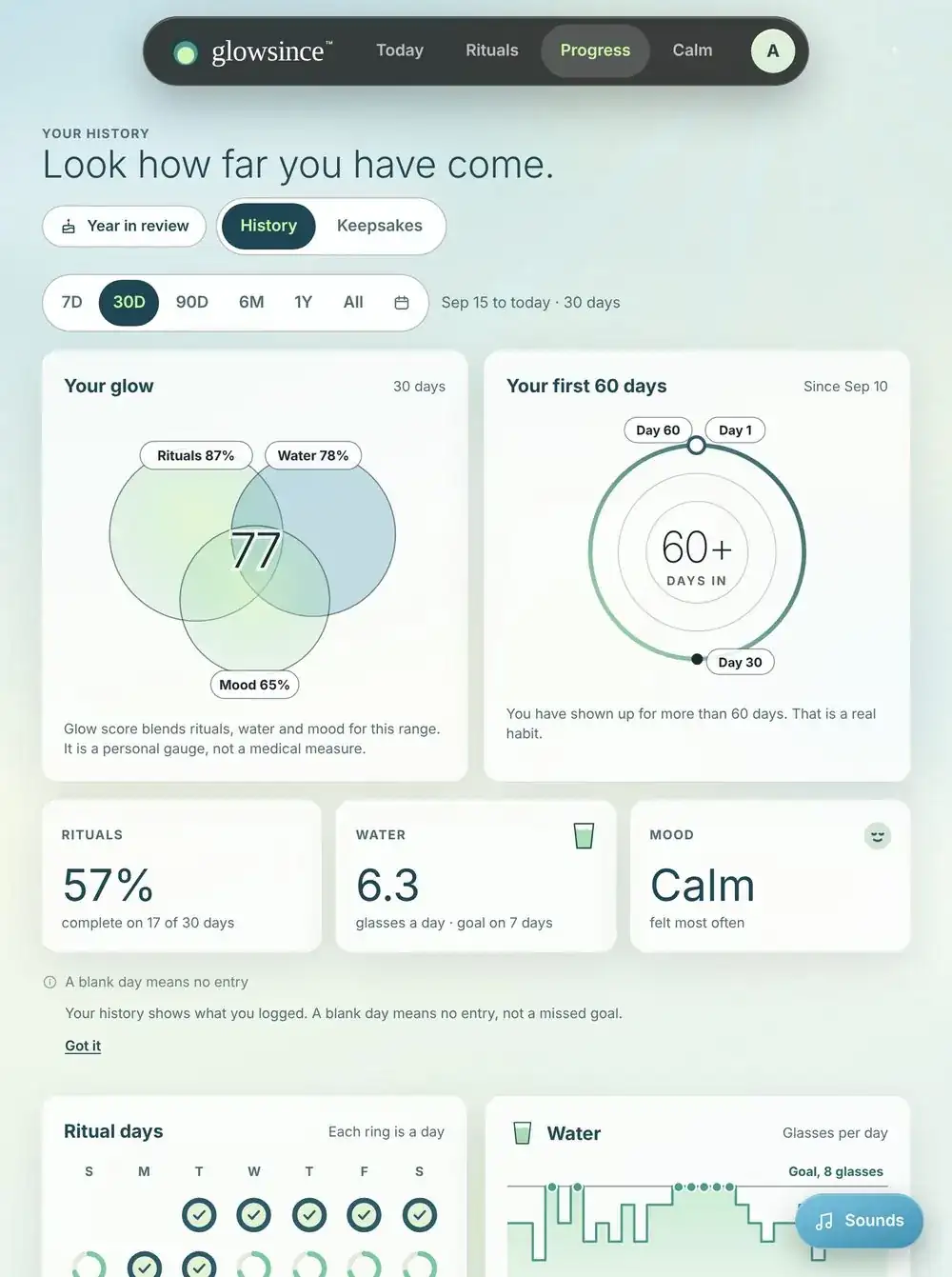
You can start on paper with our free two-week sleep diary. Glowsince also has a sleep tracker: enter when you went to bed and woke up, add how rested you felt, and see your hours over time against a goal. It stays on your device, and it is a journal, not a medical device.
Build a calmer daily rhythm
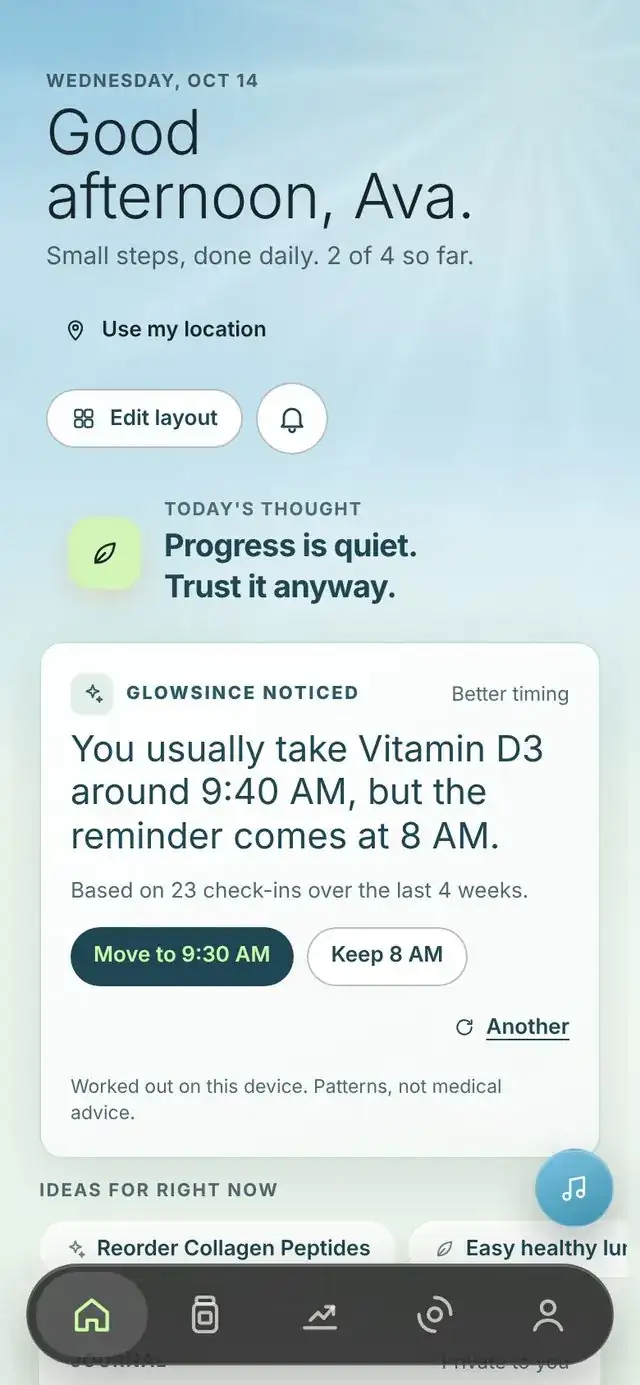
Breathing, calming sounds, mood check-ins and a sleep tracker in one private journal. Free, no sign-up, and it stays on your device.
Try Glowsince free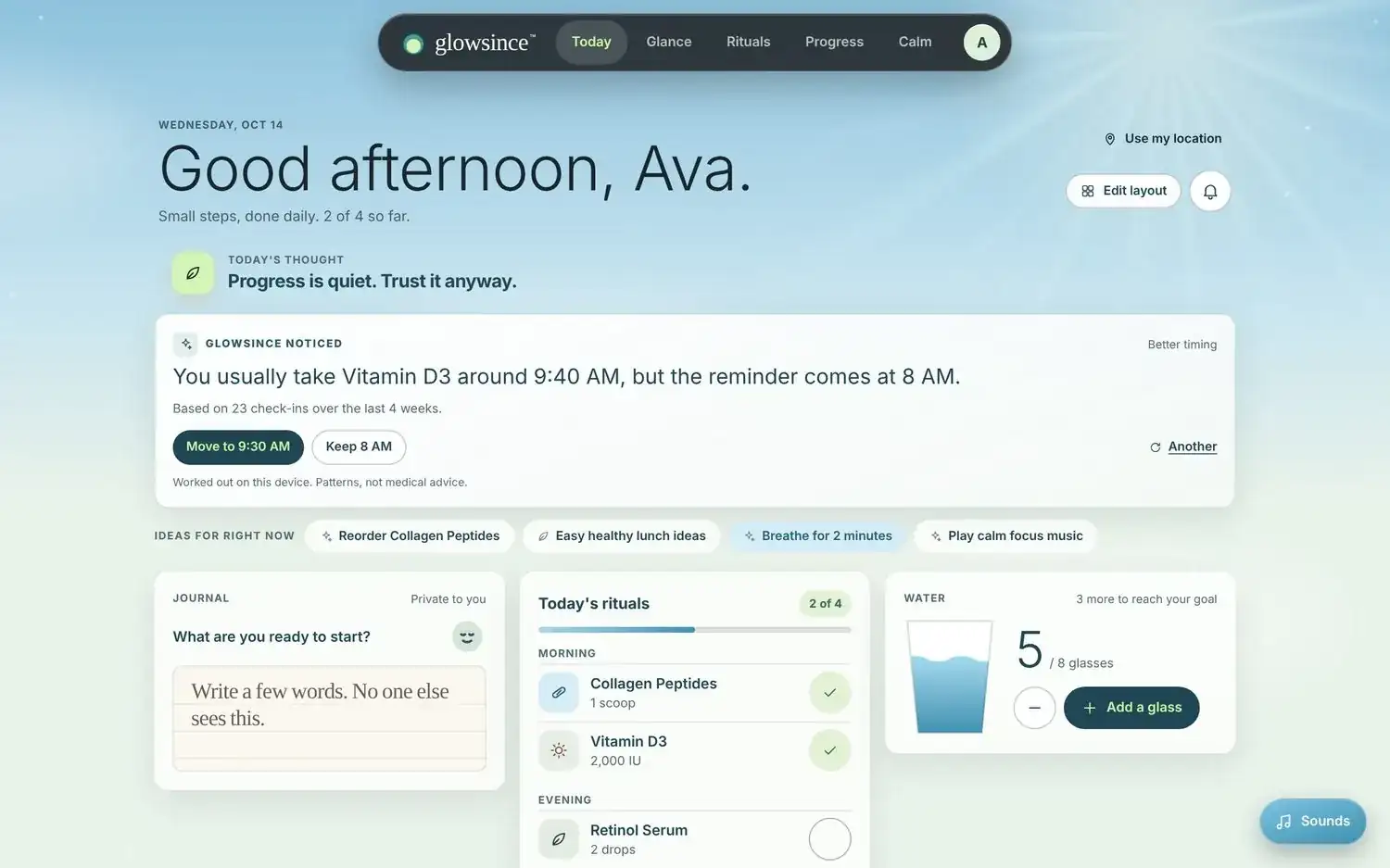
Light, screens and the morning
Light is one of the strongest signals your body uses to tell day from night. Bright light in the morning, especially outdoors, helps set your internal clock, and dim light in the last hour or two before bed helps it wind down.
In practice: open the curtains or step outside soon after waking, and switch to lamps in the evening instead of overhead lights. Bright, stimulating screens late at night make it easier to stay up, so put the phone down earlier than feels natural.
If you cannot fall asleep
Lying in bed watching the clock usually makes things worse. If you have been awake for a long while and feel frustrated, a common suggestion is to get up, go to another room, and do something quiet in low light, like reading a calm book or listening to something soothing. Go back to bed when you feel sleepy.
Keep the clock turned away if watching it makes you anxious. One bad night is normal and will not harm you. Keep your usual wake time the next morning and the following night often goes better.
Travel, shift work and bad weeks
Some disruptions are unavoidable. After a late night or a long trip, get daylight in the morning, keep meals regular, and return to your normal schedule as soon as you can rather than sleeping very late to catch up. If you work shifts or nights, consistency within your own pattern still helps, and a dark, quiet room is worth the effort.
Common questions
Is a warm drink before bed a good idea? A caffeine-free herbal tea or warm milk can be a nice cue that the day is ending, as long as it does not lead to extra trips to the bathroom. See our cozy rainy day recipes for gentle evening drinks.
Should I use my phone as an alarm? That is fine. Keep it across the room or on do-not-disturb so it is not within scrolling reach.
Do sleep trackers work? Consumer devices can help you notice trends, but they are estimates. A simple diary of bedtime, wake time and how rested you felt is often more useful than the numbers.
A sample evening
Treat this as a starting point and adjust it to your own schedule. For a 10:30 pm bedtime:
- 6:30 pm: finish dinner. Your last caffeine was hours ago.
- 8:30 pm: wrap up work and screens. Start the wind-down hour.
- 9:30 pm: dim the lights, take a warm shower, stretch or read.
- 10:15 pm: three-line journal, slow breathing, lights low.
- 10:30 pm: lights out, with a cool, dark, quiet room.
When to talk to a doctor
Habits help many people, but not everyone. Please speak to a doctor if you often cannot fall asleep or stay asleep for weeks, you wake up unrefreshed after a full night, you snore loudly or seem to stop breathing in your sleep, or you feel very sleepy during the day. These can have causes that need proper assessment.
This guide is general wellness information, not medical advice. It does not diagnose or treat any sleep condition. If you have ongoing trouble sleeping, talk to a doctor or sleep specialist.
Keep reading
 Reset in 3 minutes
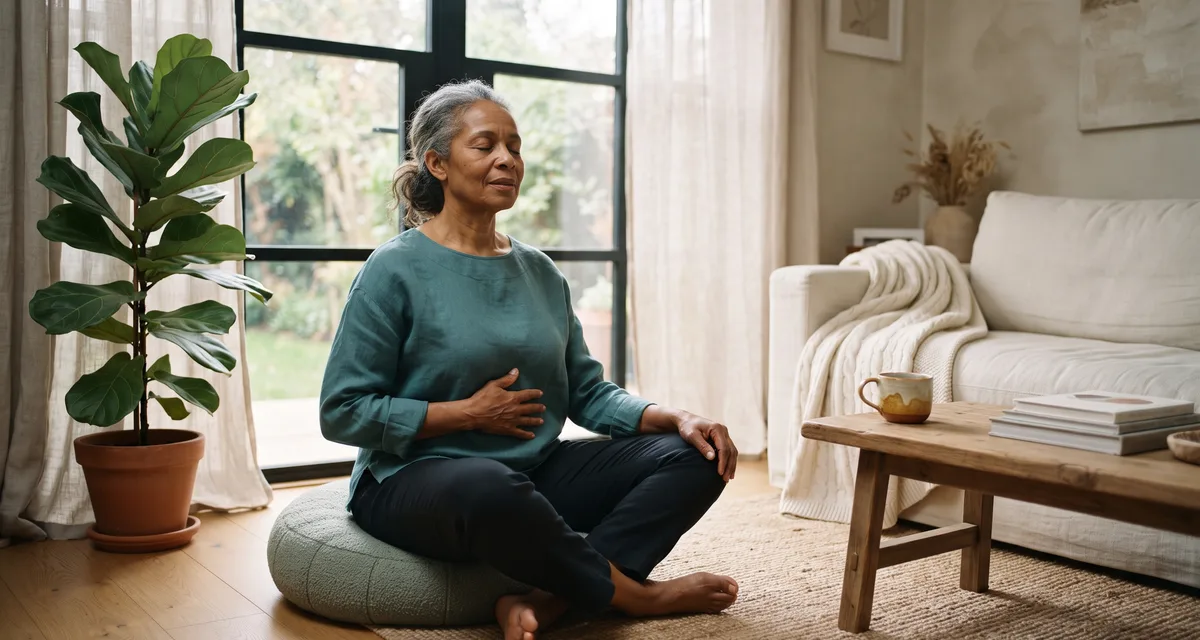 Breathing exercises for a calmer moment
 Calming sounds to help you unwind
Things that make a bedroom sleep-friendly Affiliate links
Ad disclosure: Glowsince earns a commission if you buy through these links, at no cost to you.