A calmer holiday budget
A calmer holiday budget is mostly decided before you shop. Here is a simple way to set a number, spread it across what matters and still give gifts that feel generous.

Start with a total, not a wish list
Look at what you can comfortably spend without borrowing, then write that number at the top of a page. Everything else gets measured against it. A total you chose on a quiet evening is much easier to keep than one you invent in a crowded store.
Include more than gifts. Food, hosting, decor, travel, cards, postage and wrapping all take money, and they are the lines most people forget.
Split it across categories
Give each category a planned amount, then fill in the actual amount as you go. The holiday budget tracker has a row for each category with planned, actual and left columns, so you can see at a glance where the money is going.
If one category runs over, take it from another on purpose. Moving money deliberately feels very different from finding out in January.
Plan the gifts person by person
List who you are buying for and a rough amount for each. The holiday gift planner tracks whether each gift is bought, wrapped and given.
Write ideas down the moment you have them. A list built over a few weeks usually beats a rushed shop, and it keeps you from buying duplicates.
Keep your routines steady all season
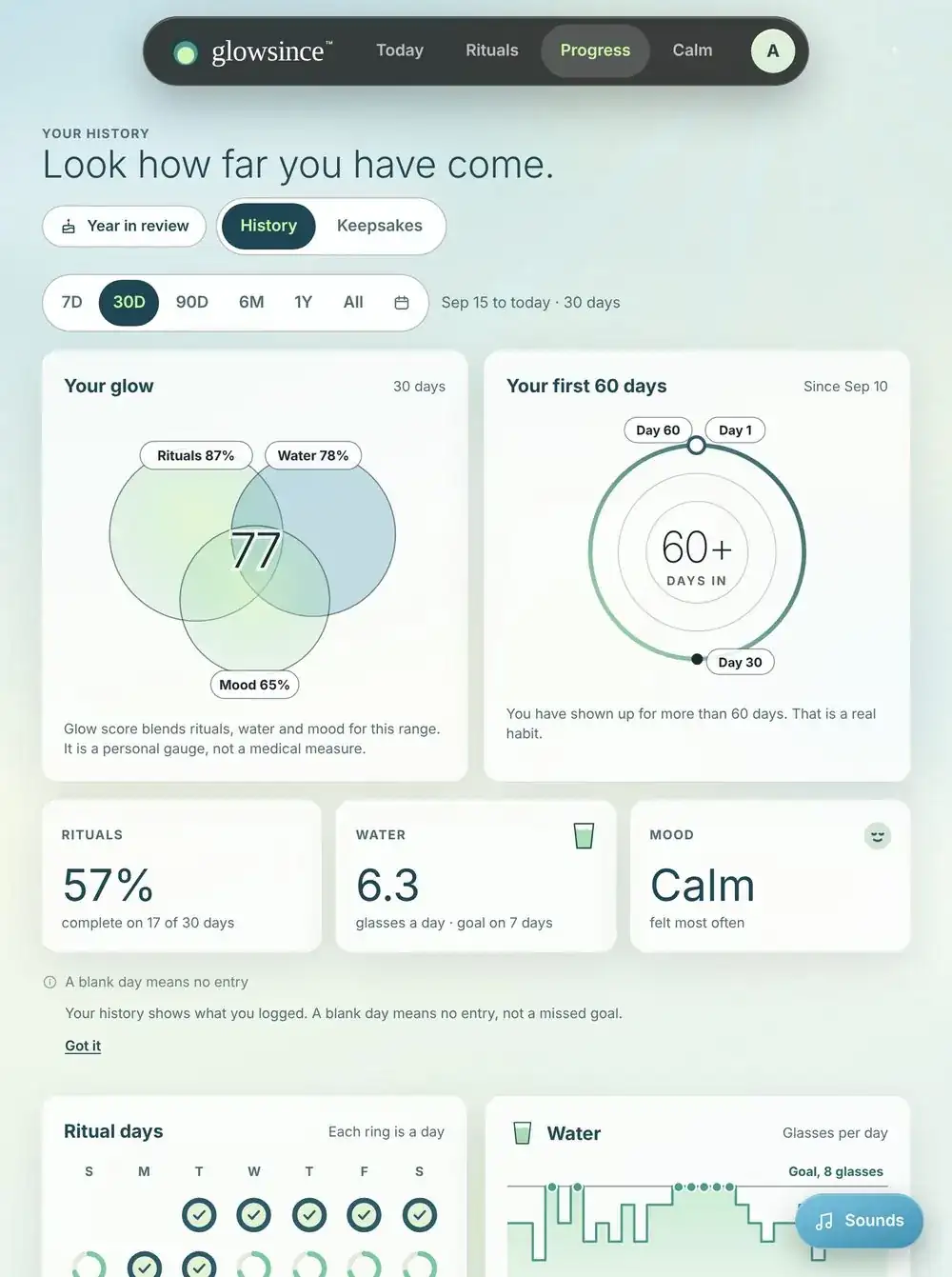
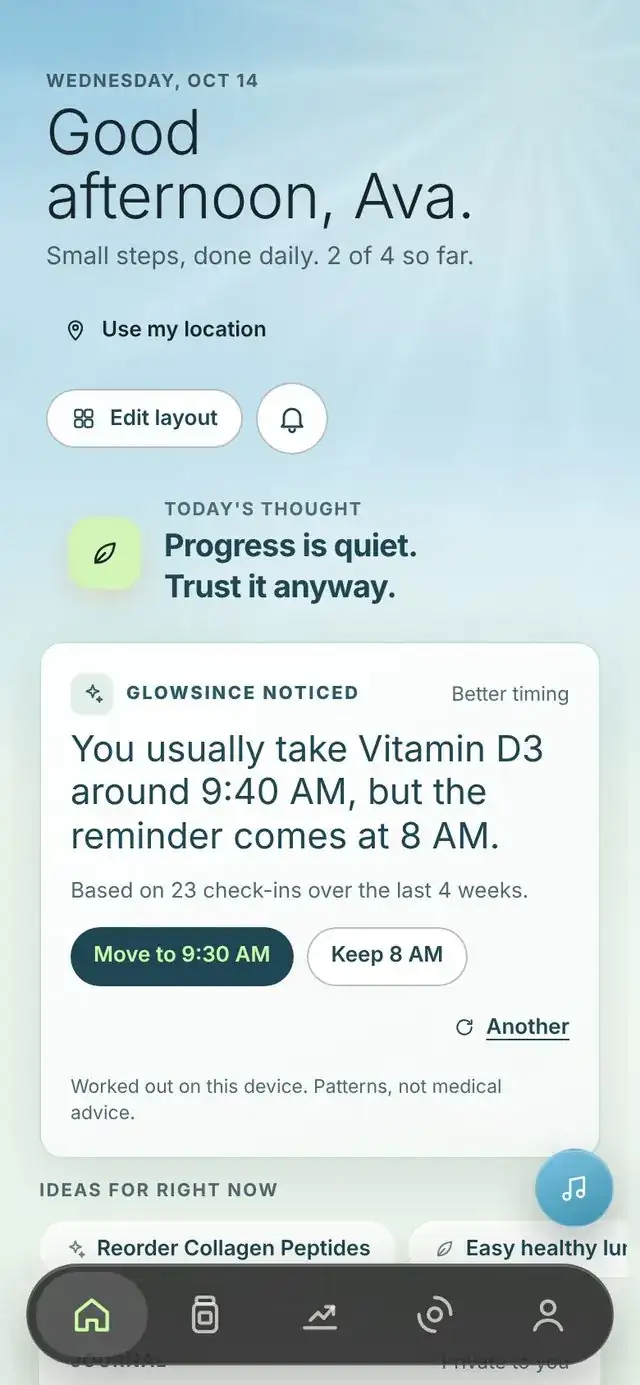
Log meals, water and your daily rituals in one private journal. Free, no sign-up, and it stays on your device.
Open Glowsince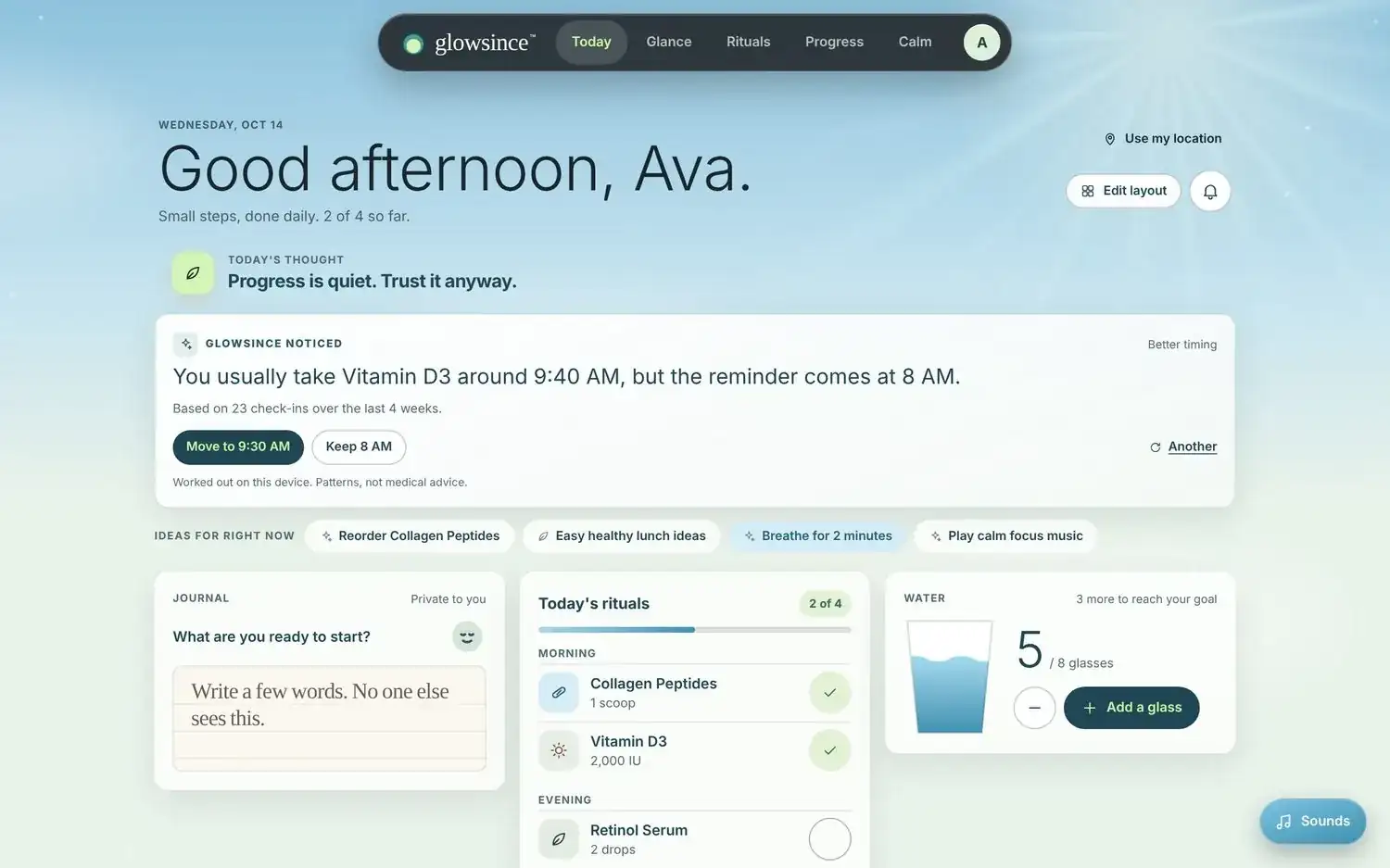
Give well without spending more
- Make something: baked goods, a framed photo or a playlist.
- Give time: a planned walk, a cooked meal or help with a project.
- Agree on a limit with family or friends, or draw names so everyone buys one thoughtful gift.
- Buy fewer, better things, and add a handwritten note.
Track as you go
Write each purchase down the same day, even small ones. Checking in once a week takes two minutes and prevents the surprise at the end of the month.
If you are using a card, consider how you will pay it off before you swipe. Spending that fits your plan feels lighter than spending you have to untangle later.
Be kind to yourself
Perfect budgets are rare. If you go over, adjust the next category and move on rather than abandoning the plan. The point is to feel in charge of your money, not to feel guilty about it.
This guide is general information, not financial advice. If money feels stressful or hard to manage, a nonprofit credit counselor or a financial professional can help.
Keep reading
 A kind year-end reflection
 Sleeping better when the days get short
 A calmer Thanksgiving plan
Things that help you stay on budget Affiliate links
Ad disclosure: Glowsince earns a commission if you buy through these links, at no cost to you.