Why you get hungry at night, and what helps
Late hunger is common, and it usually has a simple cause. Most of the fixes happen earlier in the day, not at night.

You get through the day fine, then around 9 or 10 at night you are suddenly standing in front of the fridge.
The usual reasons
- You did not eat enough during the day. A light breakfast, a rushed lunch and a small dinner often add up to real hunger by bedtime.
- Your meals were low in protein. Protein helps you feel full for longer, so meals without much of it can leave you hungry again sooner.
- You are tired. Sleep helps regulate the hormones that control appetite. When you sleep poorly, those hormones get out of balance, and you tend to feel hungrier and crave sweet or salty foods the next day.
- You are bored, stressed or winding down. Snacking in front of the TV can feel like hunger when it is really a habit or a way to relax.
- You are thirsty. Thirst is easy to mistake for hunger, especially at the end of a long day.
What helps during the day
- Do not skip meals. Eat breakfast, lunch and dinner at fairly regular times.
- Include some protein at each meal, like eggs, yogurt, beans, tofu, fish or chicken. Our high-protein breakfast ideas are an easy place to start.
- Make dinner a real meal, with protein, vegetables and some slow carbohydrates, instead of something small and rushed.
- Drink water through the day, not only at night.
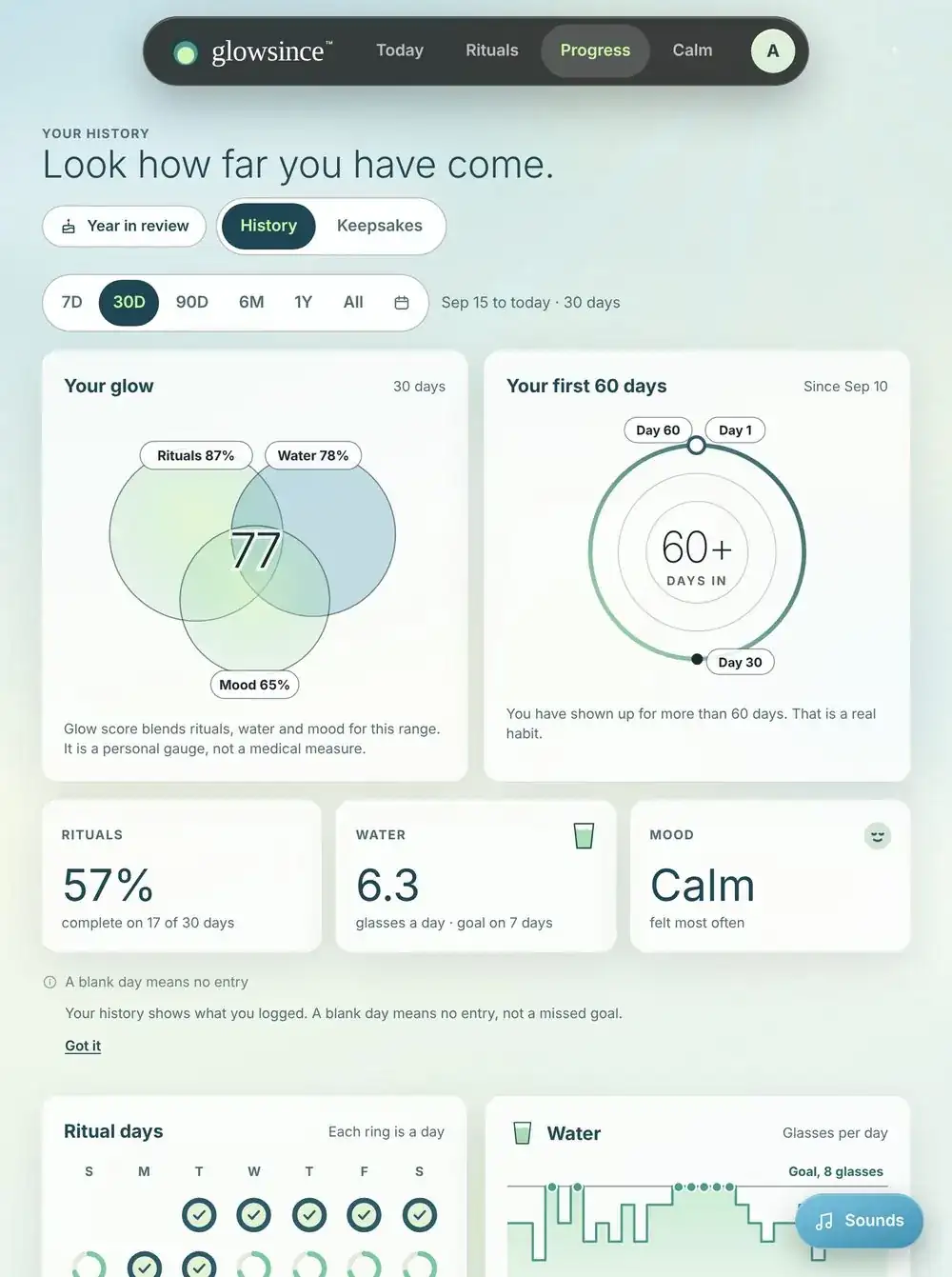
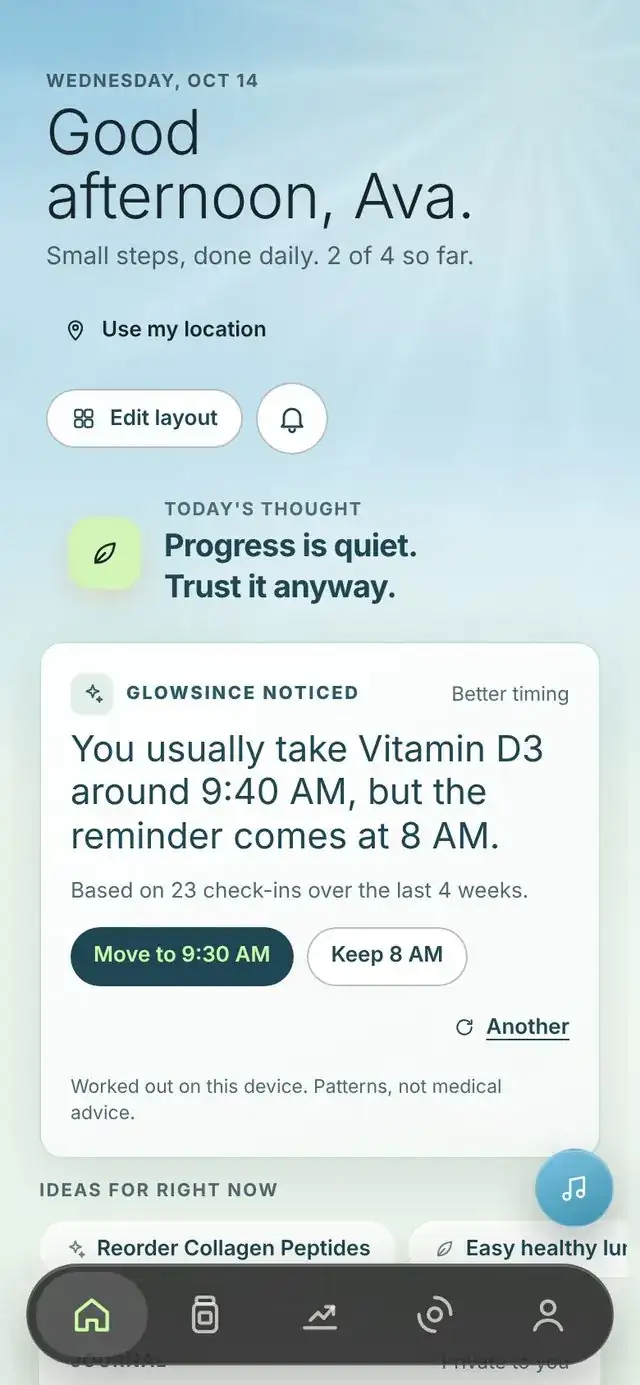
Keep your meals and routines in one place
Log meals, water and your daily rituals in one private journal. Free, no sign-up, and it stays on your device.
Open Glowsince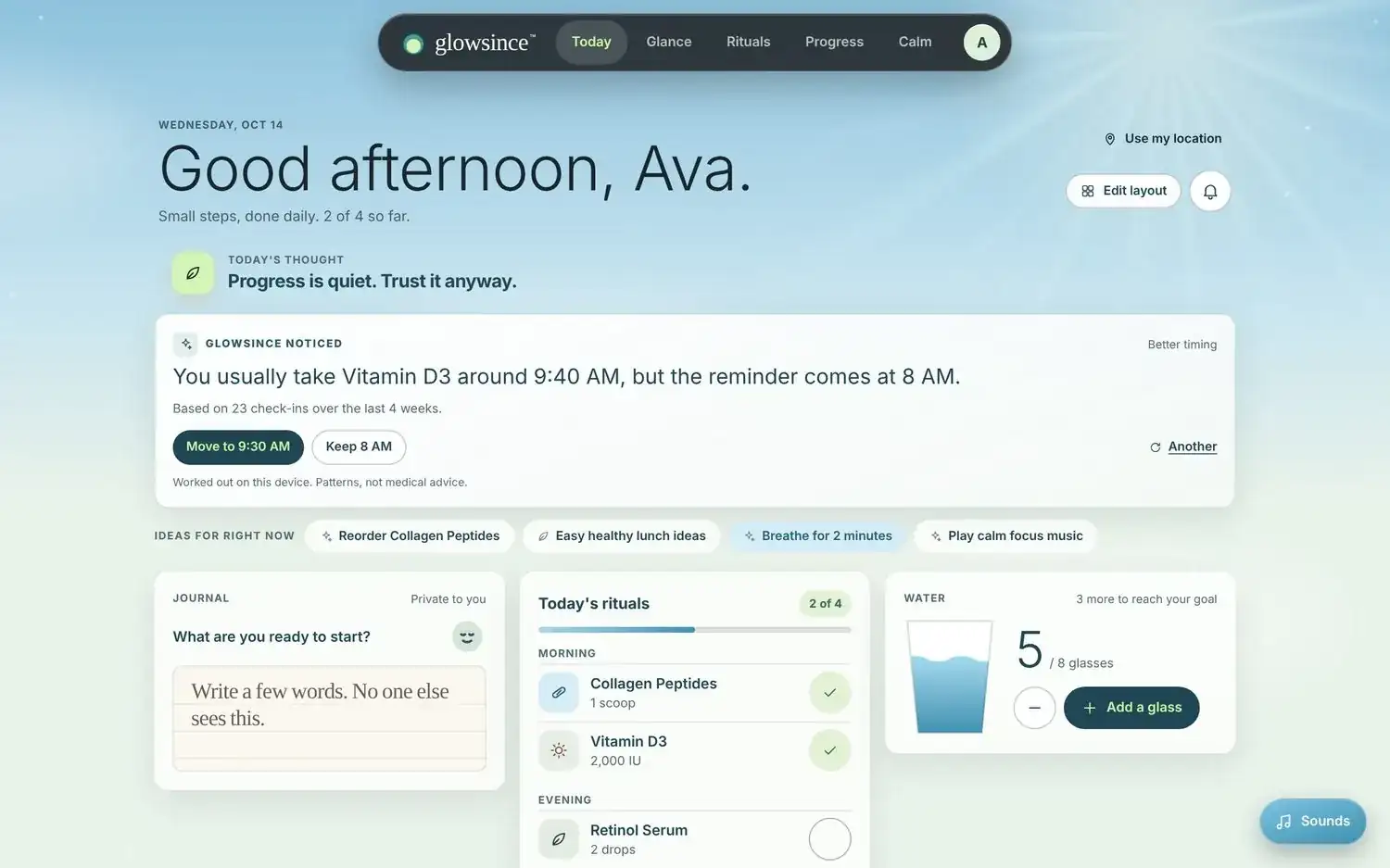
What helps in the evening
- Before you snack, pause and ask yourself whether you are actually hungry, or tired, bored or stressed.
- If you are hungry, have a small, planned snack, like Greek yogurt with berries, an apple with peanut butter, or a handful of nuts, and eat it sitting down.
- Try to finish eating a few hours before bed, which can also help your sleep.
- Change the routine that leads to the kitchen. Make tea, brush your teeth early or start your wind-down routine.
Sleep is part of the answer
Because poor sleep can turn up your appetite, better sleep often makes late hunger easier. Keep a regular bedtime and wake time, and avoid caffeine in the afternoon, since its effects can linger for hours. Our evening wind-down routine and better sleep routine guide go through the basics.
If you fast
If you follow an eating window, hunger right before your window closes, or late at night, can be a sign that your meals inside the window are too small or too low in protein. Our intermittent fasting beginner's guide covers how to build those meals.
When to talk to a doctor
Some people wake up during the night and feel they cannot fall back asleep without eating, several nights a week. That can be a sign of night eating syndrome, a recognized eating and sleep disorder. If that sounds familiar, or late-night eating feels out of your control, talk to your doctor.
This is general wellness information, not medical advice.
Sources
Keep reading
 An evening wind-down routine
 A better sleep routine
 High-protein breakfast ideas
Things that make evenings easier Affiliate links
Ad disclosure: As an Amazon Associate, Glowsince earns from qualifying purchases. Buying through these links costs you nothing extra.