Why your weight loss stalls, and what to do about it
A plateau is normal, and it does not mean you are failing. Here is why the scale stops moving and what you can try.
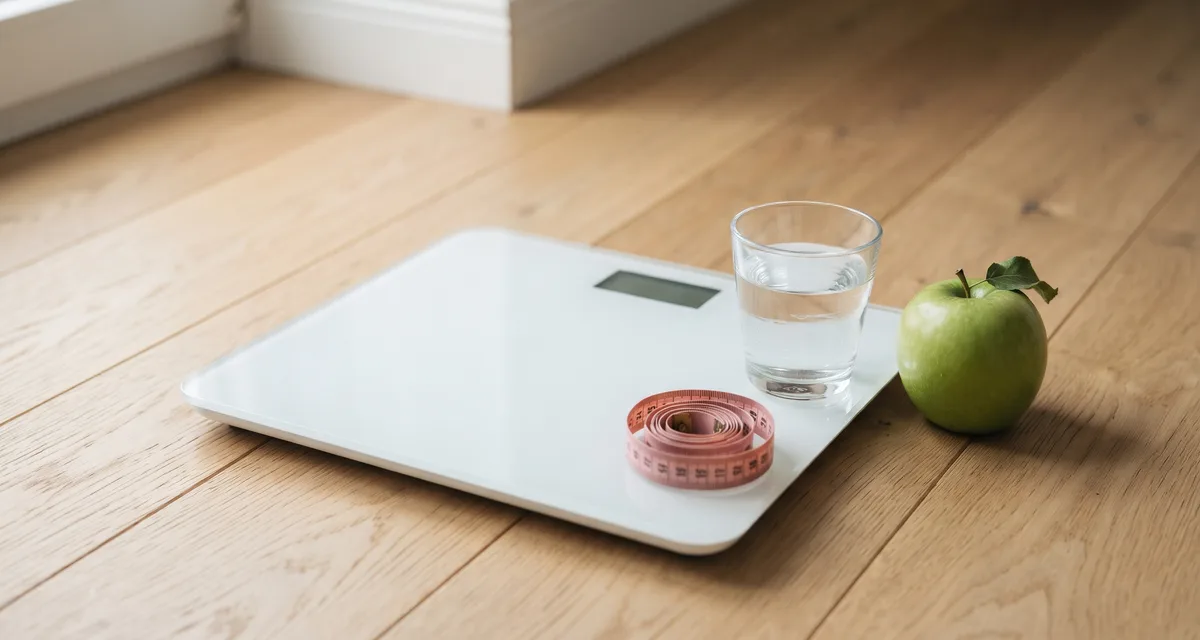
You were doing everything the same, and the scale moved every week. Then it stopped. Two weeks, three weeks, nothing.
Why it happens
- The first drop is partly water. Early weight loss comes partly from burning stored glycogen, which releases water, so some of that fast loss does not last.
- Your body needs less as you weigh less. A smaller body burns fewer calories, and losing some muscle along the way lowers it further. Eventually you burn about as much as you eat, and the scale stops.
- Water can hide progress. Water makes up a large share of body weight, so the scale can stay flat even while you are losing fat. Sore muscles after harder workouts, your period, salty meals and some medications, like ibuprofen, can all hold extra water for a while.
- Small habits slip. Slightly bigger portions, more snacking and fewer steps are easy to miss, and they add up.
Keep your meals and routines in one place
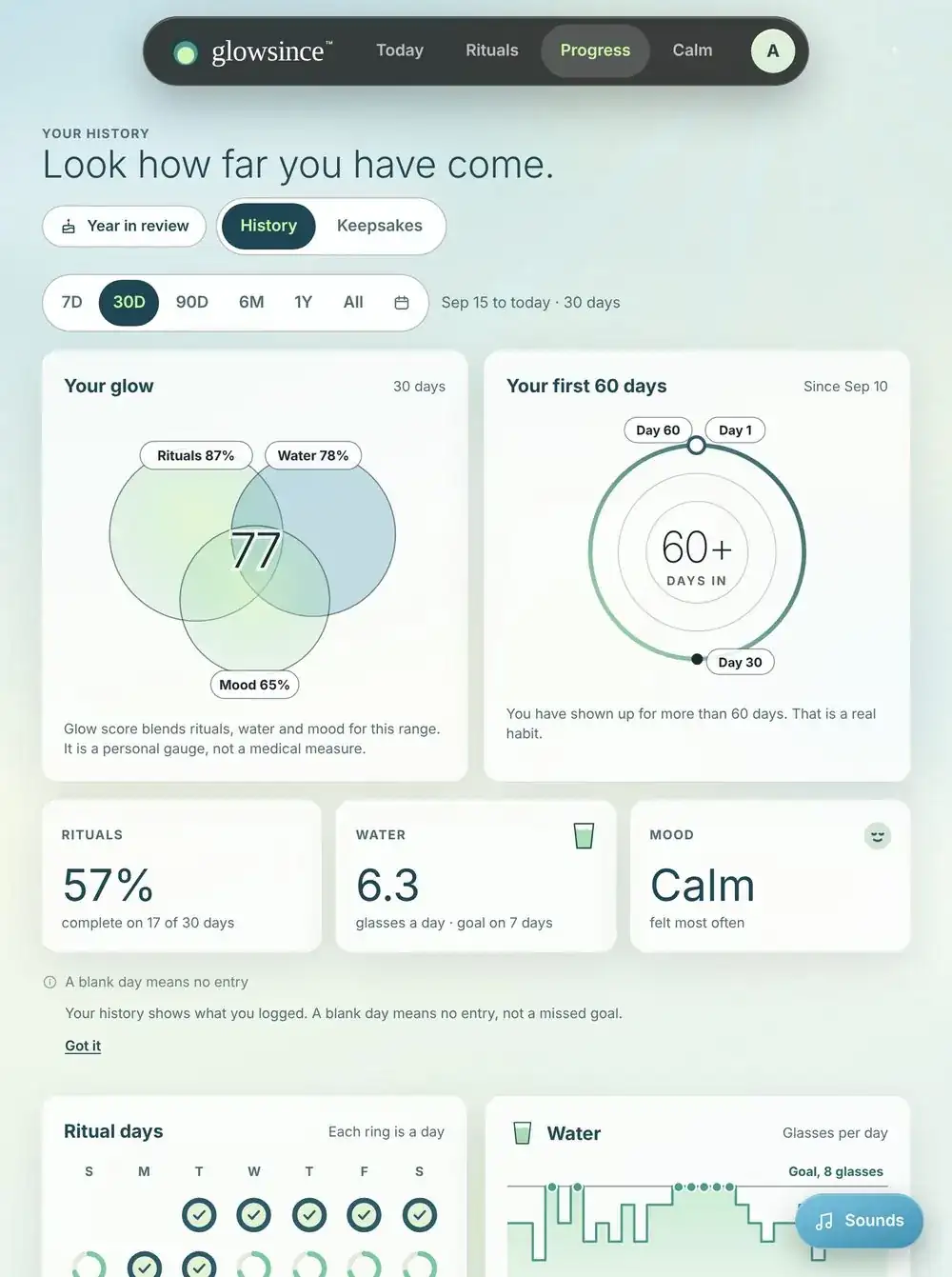
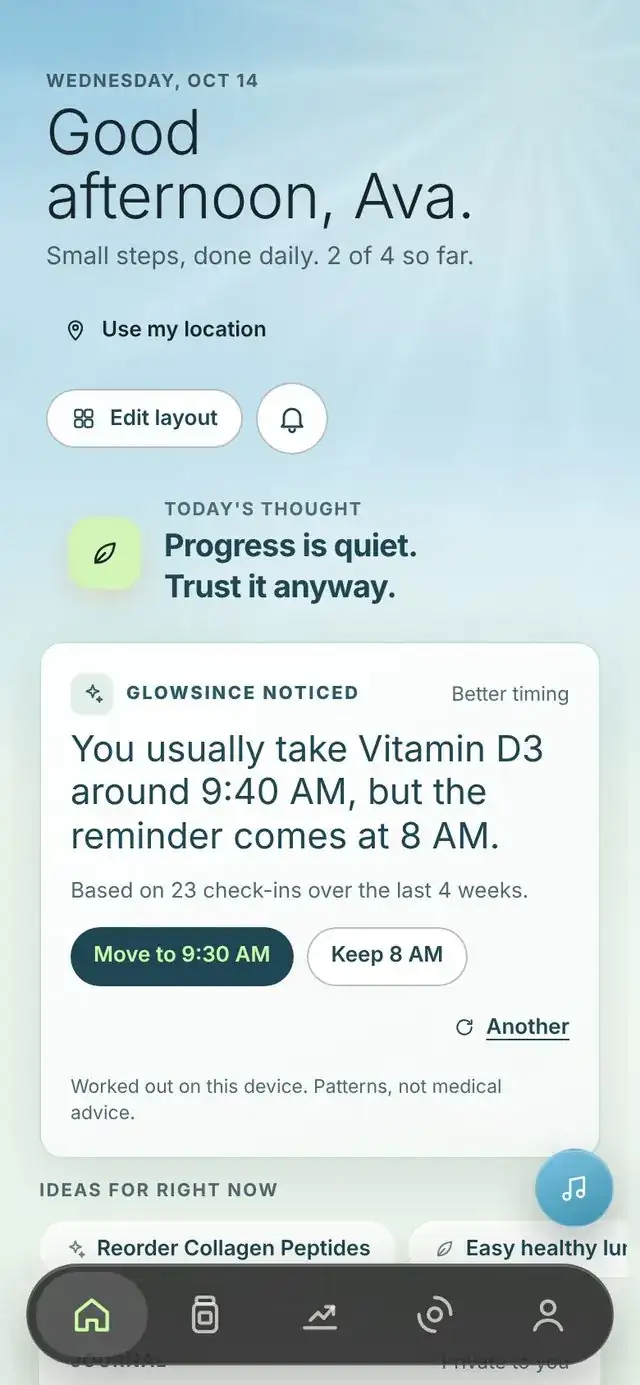
Log meals, water and your daily rituals in one private journal. Free, no sign-up, and it stays on your device.
Open Glowsince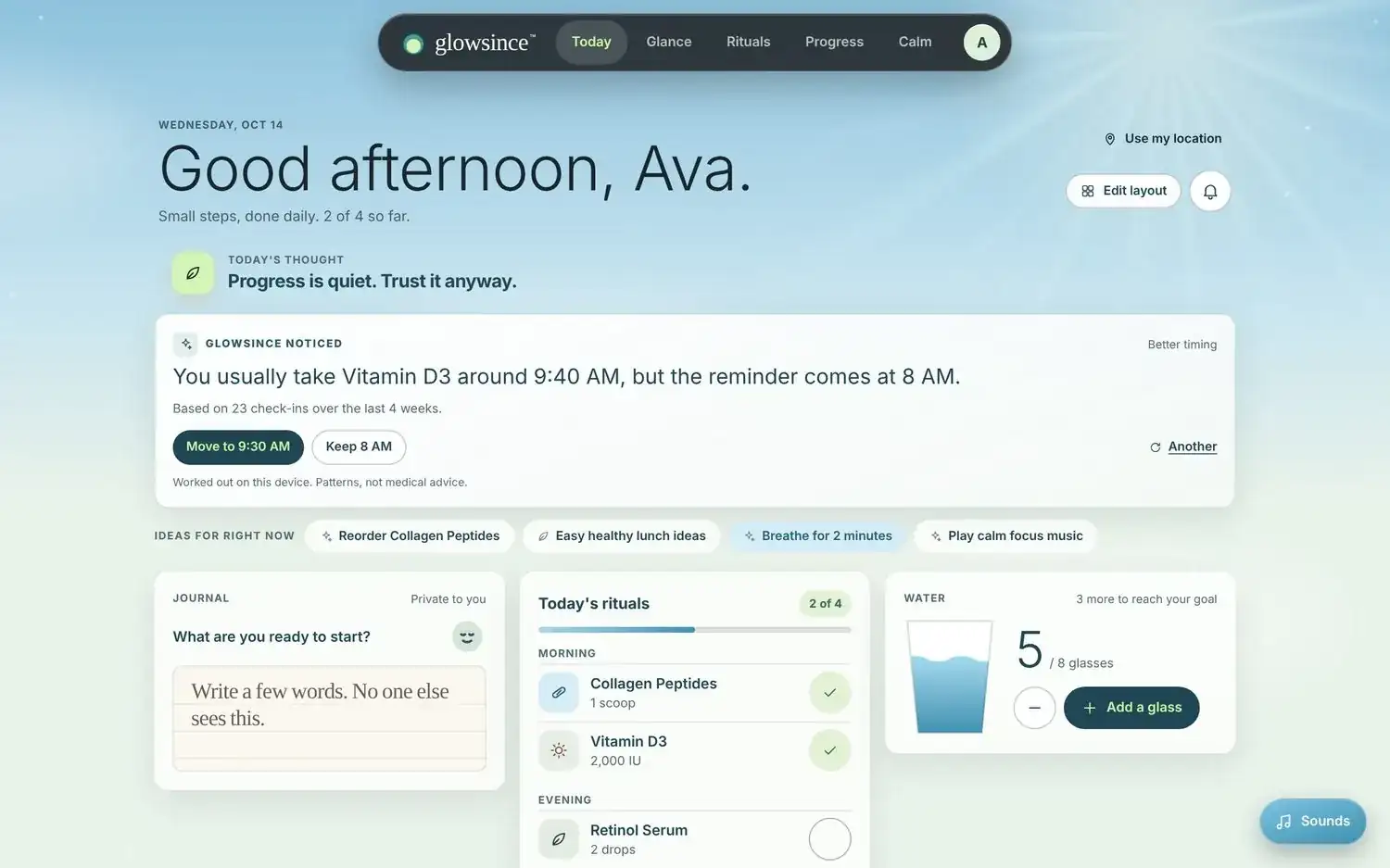
What helps
- Wait a little. If a plateau is only a week or two, it may be water. Compare your weight over several weeks, not day to day.
- Look at your habits honestly. A few days of writing down what you eat often shows what changed. Our Glowsince food log makes this easy, and it is free.
- Move a bit more. The U.S. guidelines suggest at least 150 minutes a week of moderate activity, and more can help. Walking counts, and so does moving more through your day.
- Add some strength training. Building muscle helps you burn more calories, so weights, bands or your own body weight are a good addition.
- Do not crash diet. Cutting calories very low often brings constant hunger, and it is hard to keep up. If you want to eat less, do it modestly.
- Check other measures. Your clothes, your energy, your sleep and your progress photos can show change when the scale does not. The progress photos in Glowsince are made for this.
If you fast
A plateau can happen with intermittent fasting too. Eating the same foods in a shorter window does not guarantee a calorie gap, so check portion sizes and protein inside your window. Our intermittent fasting beginner's guide covers the basics.
When to talk to a professional
If your weight has not changed for a long time despite steady effort, or you feel unwell, tired all the time, or are thinking about very low calorie eating, talk to your doctor or a registered dietitian. Even modest weight loss improves health, so it is worth recognizing what you have already done.
This is general wellness information, not medical advice.
Sources
Keep reading
 Intermittent fasting for beginners
 Why you get hungry at night
 High-protein breakfast ideas
Simple tools for tracking progress Affiliate links
Ad disclosure: As an Amazon Associate, Glowsince earns from qualifying purchases. Buying through these links costs you nothing extra.